

Bengaluru, August 2026: The MAHE–IETO Centre of Excellence in DWEEPA, associated with Srishti Manipal Institute of Art, Design and Technology, Manipal Academy of Higher Education (MAHE), Bengaluru, is expanding its work at the intersection of environmental research, sustainability, design, education, policy, innovation and international collaboration.
Established in November 2023, the Centre focuses on sustainability and resilience, socioecological justice, environmental education, practice-based research, policy engagement and the development of creative methodologies to address complex environmental challenges. Its work seeks to bring together academic research, design practice, policy perspectives and community engagement to develop meaningful and context-sensitive approaches to environmental issues.
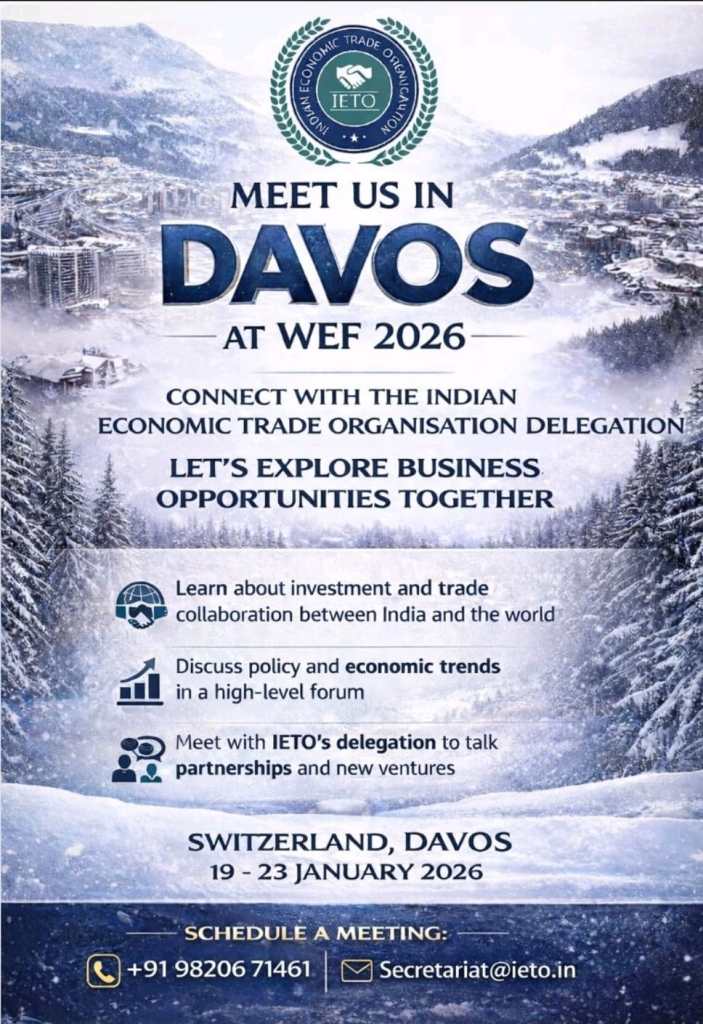
A significant milestone in the Centre’s development has been its collaboration with the India Economic Trade Organization (IETO). An MoU between MAHE and IETO was signed on 7 January 2026, followed by a university presentation on 18 March 2026 and the formal renaming of the Centre as a Centre of Excellence on 30 April 2026. The partnership provides a framework for collaboration across research and development, capacity building, events, outreach, innovation, environment and sustainability, climate change, law and policy, knowledge systems and sustainable development.
The collaboration also creates opportunities for joint projects, research partnerships, consultancy, networking, events, resource mobilisation and international engagement. Through IETO’s wider network, the Centre is working to strengthen connections with diplomatic missions, international organisations, foreign institutions and corporates in India and abroad, creating new avenues for knowledge exchange, institutional partnerships and support for environmental research.
The partnership is also opening opportunities to take the Centre’s research and academic work to national and international platforms. The Centre is exploring engagement around the BRICS Summit in September 2026, where its work could be presented to international participants while creating opportunities to identify potential research partners, sponsors and institutional collaborators. The collaboration is further expected to facilitate connections with diplomatic and corporate networks that can support research, events, technology, equipment and other Centre initiatives.
As part of its long-term academic and research agenda, the Centre is exploring the development of signature workshops, expert talks, symposiums and a biennial conference in collaboration with IETO. The proposed conference would bring together academics, policy-makers and doctoral scholars to present research, exchange ideas, build collaborations and develop national and international networks focused on sensitive and context-responsive design solutions. Rather than being a one-time engagement, the Centre is exploring the conference as part of a longer-term programme that could develop a 10-year trajectory around ecological conservation, livelihoods, environmental management and sustainable development.
The Centre also plans to organise an annual exhibition and strengthen research dissemination through publications, policy-oriented outputs and Non-Traditional Research Outputs (NTROs), enabling research to reach wider academic, professional and public audiences.
The Centre is exploring opportunities to collaborate with international environmental platforms, including the World Coastal Forum, with potential engagement around coastal zone management, ecological restoration and environmental planning. The Panchagangavali River Basin is being considered as an important research site and case study through which environmental management, conservation, livelihoods and community-related research can be developed and presented over time. Such initiatives will provide opportunities for Centre researchers and students to engage with wider national and international conversations on environmental sustainability and resilience.
The Centre currently supports doctoral and practice-based research across areas including environmental education, participatory planning, policy and advocacy in river-basin management. As its research portfolio expands, it is seeking additional resources for research software, equipment and infrastructure. Two immediate priorities are team expansion and an ArcGIS software licence, which would support advanced mapping and spatial analysis and enable researchers to better visualise complex environmental and spatial relationships.
The Centre is also developing a five-year resource and funding plan to support research, technology, events, dissemination and expansion of its research team. The Centre and IETO are exploring opportunities to engage corporates, CSR programmes, diplomatic networks and international organisations for financial and in-kind support. Such support could contribute towards research projects, conferences, software and equipment, student and researcher programmes and knowledge dissemination.
The Centre has been allocated approximately 1,300 sq. ft. of dedicated space at Srishti Manipal Institute, providing an environment for research, seminars, student engagement, collaborative projects and events. Its growing academic ecosystem includes doctoral scholars, researchers, design associates, interns and academic collaborators, with opportunities for partnerships with international universities, including the University of Westminster, UK. The Centre is also looking to expand its academic footprint through doctoral recruitment, international visiting faculty and new academic programmes, including a proposed two-year Master of Design programme.
The MAHE–IETO Centre of Excellence in DWEEPA aims to build a sustained platform where academia, design, environmental research, policy, diplomacy, industry and communities can work together to address complex environmental challenges. Through its partnership with IETO, the Centre seeks to strengthen research collaboration, international outreach, diplomatic and corporate engagement, resource mobilisation and knowledge dissemination, while creating meaningful opportunities for students, researchers and practitioners.
Its long-term vision is to move beyond individual projects towards a continuous programme of research, conferences, exhibitions, policy engagement and international collaboration. Initiatives such as the Panchagangavali River Basin System project are expected to provide practical platforms for demonstrating how research, design and interdisciplinary collaboration can contribute to environmental conservation, sustainable livelihoods and resilient futures.


About The Author


